Are you looking for a home that feels calm the moment you pull into the driveway? For many buyers, Prosper stands out because it offers more breathing room than many nearby suburbs while still keeping you connected to the Dallas-Fort Worth area. If you are weighing space, privacy, and a quieter daily rhythm, this guide will help you understand why Prosper gets so much attention and what to look for as you narrow your search. Let’s dive in.
Prosper offers room to breathe
Prosper has built its identity around open space, larger homesites, and a less dense feel. The town’s own history and planning materials describe growth shaped by buyers who wanted wide-open spaces, rolling hills, and a quieter lifestyle while staying within reach of major job centers.
That appeal is not just a feeling. As of January 1, 2025, Prosper reported 46,087 residents across 27 square miles, or about 1,707 people per square mile. Compared with denser suburban patterns, that helps explain why many buyers experience Prosper as more spacious and more relaxed.
For some buyers, that difference shows up in small daily moments. You may notice wider views, more separation between homes in certain areas, and a stronger sense that outdoor living is part of the lifestyle instead of an afterthought.
Space means more than square footage
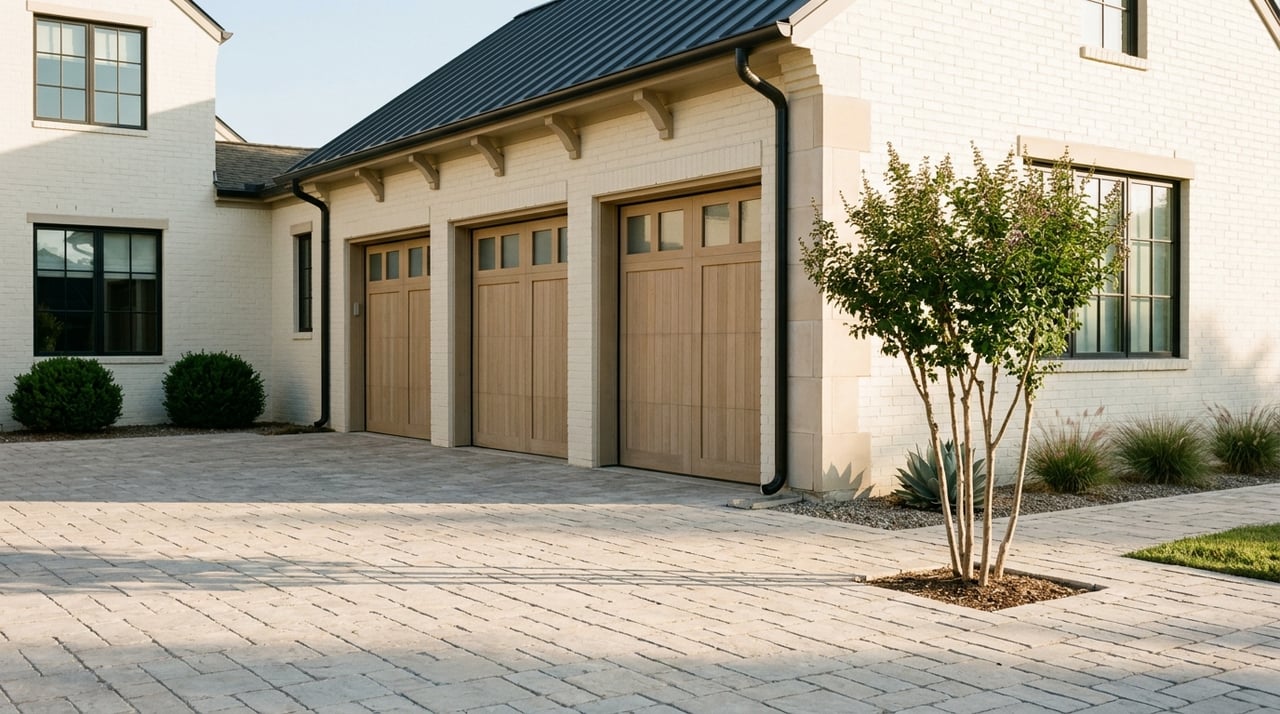
When buyers say they want more space, they are often talking about more than a bigger house. They may want a backyard that actually works for entertaining, room for a pool, extra garage capacity, a detached structure, or simply more privacy between neighboring homes.
That is one reason Prosper continues to appeal to design-conscious and lifestyle-focused buyers. A home can feel luxurious not because it is excessive, but because it fits the way you want to live, host, and unwind.
Prosper’s 2024 average valued home price was $823,356, and the town reported a median household income of $214,000. Those numbers frame Prosper as a higher-priced market, so buyers are often looking closely at how well a property delivers on both function and long-term fit.
Prosper supports different lot sizes
One of Prosper’s practical advantages is that the town does not follow a one-size-fits-all residential model. Its Unified Development Code includes several single-family districts, including Single Family-Estate, Single Family-15, and Single Family-10.
That matters because lot size and lot rules shape what you can actually enjoy after closing. In the estate district, the minimum lot area is one acre, with a 150-foot minimum lot width and 200-foot minimum depth. The Single Family-15 district requires 15,000 square feet, and the Single Family-10 district requires 10,000 square feet.
For you as a buyer, this means Prosper can offer different expressions of space depending on the neighborhood and zoning pattern. Some areas are geared toward true estate-style living, while others still provide a larger-lot suburban feel without needing a full acre.
Outdoor living is part of the draw
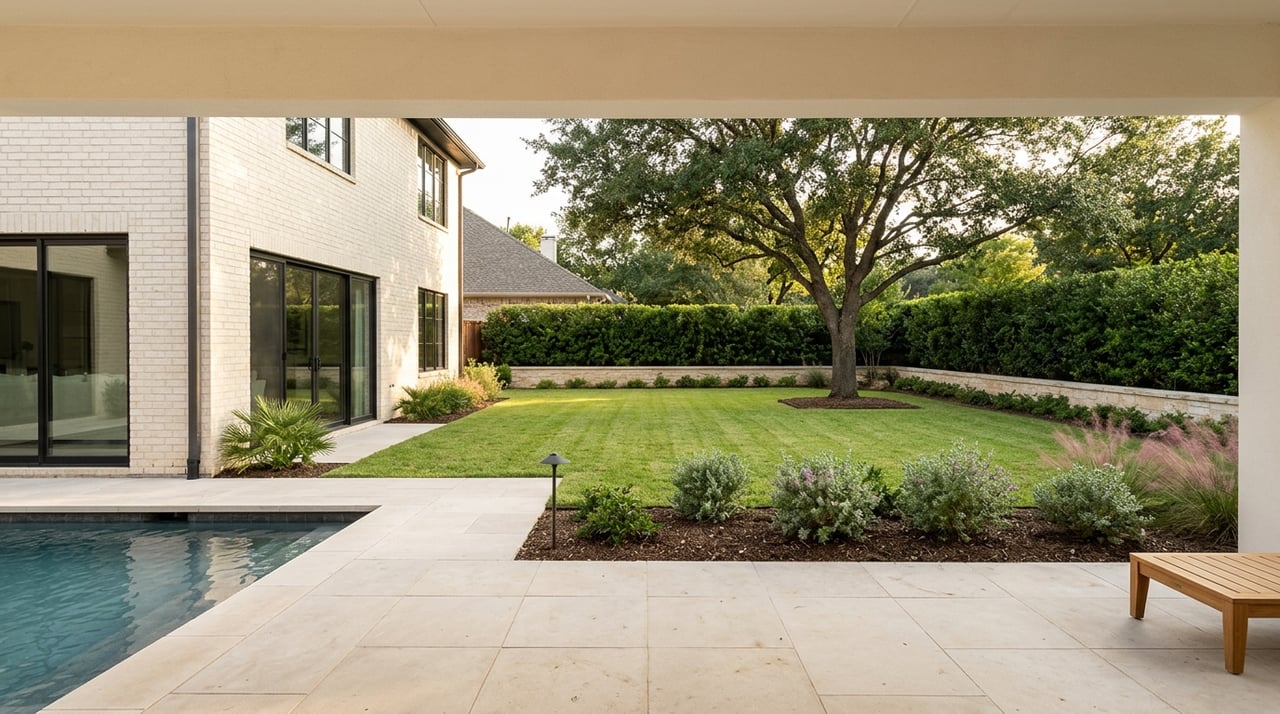
A larger lot only matters if it gives you usable outdoor space. In Prosper, that can translate into room for a covered patio, pool planning, a garden, extra parking flexibility, or simply a more comfortable sense of separation.
The town’s planning framework also shows that open space is intentional. Open-space plans are required with site plans, and the process ties landscaping and open space back to the zoning ordinance, parks plan, and open-space master plan.
Prosper’s Parks & Recreation Department also states that its mission includes providing both active and passive recreation while preserving natural resources. The town maintains a broad parks directory with multiple neighborhood and community parks, which supports the overall sense that green space is part of how Prosper is designed.
Quiet does not mean disconnected
A big part of Prosper’s appeal is that you can have a calmer home environment without feeling cut off. Prosper lists its location as 35 miles from downtown Dallas, 32 miles from DFW International Airport, 14 miles from Collin County Regional Airport, and 55 miles from Fort Worth.
For many buyers, that balance is the sweet spot. You can prioritize privacy and a less dense setting at home while still maintaining access to regional business, travel, and entertainment destinations.
Road access plays a major role in that equation. The North Texas Tollway Authority describes the Dallas North Tollway as a quick connection between downtown Dallas and W. First Street in Prosper, and the extension north of US 380 is planned to open by the end of 2027, weather permitting.
Prosper is largely car-oriented
If you are relocating from a more transit-connected area, this is important to understand early. Prosper’s transit options are limited and eligibility-based through curb-to-curb service programs, which means most residents rely on driving for day-to-day mobility.
That does not make Prosper less appealing, but it does shape how you should evaluate location. If you want stillness at home, you will also want to think through commute patterns, highway access, and how often you expect to travel across the metroplex.
The town’s 2024 annual report projects a build-out population of 70,000, so infrastructure and traffic patterns will likely continue evolving as Prosper grows. Buyers who plan ahead often feel more confident about choosing the right pocket of town for both present needs and future convenience.
Not every lot feels equally private
This is where a thoughtful home search matters most. A larger lot is not automatically a better lot, and a beautiful home can still fall short if the parcel does not support the way you want to use the property.
In Prosper, lot orientation, setbacks, and easements can all affect real-world privacy and flexibility. For example, corner lots must respect front-yard setbacks along both street frontages, which can reduce your usable yard area in ways that are not obvious from a listing photo.
You will also want to look beyond the lot size on paper. Ask how the home sits on the parcel, what sits behind and beside it, and whether the backyard depth is truly usable for the lifestyle you have in mind.
Easements can change what is possible
This is one of the most overlooked parts of buying a home with land. Prosper’s code states that no structure, including pools, may encroach into a public easement, and easements may be required for streets, drainage, utilities, and fire access.
In practical terms, that means a generous-looking yard may still have limitations. A pool, shed, retaining wall, or future addition could be affected if utility or drainage easements take up key portions of the lot.
The property owner is also responsible for maintaining easement areas. If outdoor living is one of your top priorities, it is worth reviewing the survey and buildable area carefully before you make assumptions about what can be added later.
Neighborhood feel varies across Prosper
Another reason buyers benefit from local guidance is that Prosper is not a single, uniform product. Some areas reflect estate-style and lower-density single-family patterns, while selected areas, especially along the Dallas North Tollway corridor, include planned-development districts that allow mixed-use and higher-intensity housing.
That distinction matters if your top priority is stillness. You may be drawn to Prosper in general, but the experience of living near a more corridor-oriented setting can feel very different from living in a neighborhood designed around larger homesites and a backyard-centered lifestyle.
If privacy is high on your list, compare neighborhoods carefully instead of assuming they all offer the same level of separation and quiet. The right fit often comes down to surrounding land use, lot orientation, and how the community is planned as a whole.
What to prioritize in your search
If Prosper is on your shortlist, it helps to define what “space and stillness” means to you before touring homes. That way, you can evaluate each property with more clarity and avoid getting distracted by square footage alone.
Here are a few smart priorities to keep in mind:
- Buildable backyard depth for a pool, patio, or future outdoor project
- Lot orientation and what sits behind and beside the home
- Setbacks and easements that may limit future use
- Interior versus corner lot placement
- Community pattern that feels estate-like or lower density rather than corridor-oriented
- Commute access based on your real weekly routine
A calm home search usually starts with clear criteria. When you know whether you value privacy buffers, extra garage space, entertaining flow, or future lot flexibility most, the decision-making process becomes much more focused.
Why Prosper resonates with lifestyle-first buyers
Prosper appeals to buyers who want more than a bigger address. It offers a combination of open space, lower density, intentional green space, and regional accessibility that can feel increasingly hard to find in fast-growing North Texas.
For many households, the draw is simple. You want a home that supports a quieter rhythm, gives you room to spread out, and still keeps you connected to the rest of DFW when you need it.
That kind of move deserves a careful, step-by-step approach. The right home in Prosper is often the one that aligns with how you actually want to live, both inside the house and across the lot itself.
If you are considering a move to Prosper and want a thoughtful, lifestyle-first strategy for finding the right fit, Krista Cheatham can help you evaluate neighborhoods, lot potential, and the details that shape long-term satisfaction.
FAQs
Why do buyers choose Prosper for more space?
- Buyers often choose Prosper because the town is known for open space, larger-lot housing options, and a less dense feel than many nearby suburbs.
Is Prosper, Texas, a low-density community?
- Prosper reported 46,087 residents across 27 square miles as of January 1, 2025, which equals about 1,707 people per square mile and helps explain its roomier feel.
Are large lots in Prosper always more usable?
- No. Setbacks, easements, lot shape, and the home’s position on the parcel can all affect how much yard you can actually use.
What should buyers check before buying a lot in Prosper?
- Buyers should review lot orientation, corner-versus-interior placement, what is behind and beside the property, and whether easements or setbacks limit future plans.
Is Prosper convenient for commuting around DFW?
- Prosper remains connected to the region by road, including the Dallas North Tollway, but most residents rely on driving because local transit options are limited and eligibility-based.
Do all Prosper neighborhoods feel the same?
- No. Some neighborhoods are more estate-style and lower density, while selected areas, especially near the Dallas North Tollway corridor, may include mixed-use or higher-intensity development patterns.